
A Ugandan military court has ruled that prominent opposition figure Kizza Besigye can be tried on charges of treachery, a crime that carries the possibility of the death penalty if he is convicted. This ruling, issued on Tuesday, significantly escalates the legal challenges Besigye faces as Uganda prepares for its 2026 presidential elections.
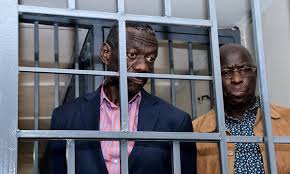
Besigye, a veteran political leader who has contested the presidency four times, first went missing in Nairobi, Kenya, on November 16, 2024. Shortly afterward, he and his co-accused, Obeid Lutale, appeared before the military court in Kampala, the Ugandan capital. The charges initially brought against Besigye included illegal possession of a firearm and allegations that he had solicited military support abroad to destabilize Uganda’s national security.
Despite denying the accusations, Besigye, 68, was remanded in custody. In a new development, the military prosecutor amended the charge sheet, adding a treachery charge and introducing a third suspect, who is a serving army officer. This new charge of treachery adds further gravity to the case, especially as a conviction could result in a death sentence.
Besigye has faced multiple arrests and assaults throughout his political career, yet he has never been convicted of any crime. His latest legal battle has drawn the attention of international human rights organizations. Amnesty International, based in the United Kingdom, condemned Besigye’s detention, calling it an "abduction" and a violation of international human rights laws, particularly the fair trial protections associated with extradition processes. Human Rights Watch, based in the United States, also criticized the case, calling it part of a broader pattern of Uganda’s authorities misusing military courts to suppress opposition figures.
Besigye’s trial comes at a time of heightened political tension in Uganda, with President Yoweri Museveni, who has ruled since 1986, expected to seek re-election, though he has yet to officially announce his candidacy. Critics of Museveni have long accused him of stifling opposition voices, with many fearing an uncertain political transition, as there is no clear successor within his National Resistance Movement (NRM).
A trained physician and retired military officer, Besigye served in Uganda’s army as a colonel before retiring to focus on politics. He was also the president of the Forum for Democratic Change (FDC), which, under his leadership, became one of Uganda’s most influential opposition parties.
As the legal case against Besigye continues, it serves as a critical moment for Uganda’s political future, with ongoing concerns about the country’s democracy and the treatment of opposition figures under the current government.
Post a Comment